

Tips for Raising Bilingual Children for Busy Quebec Parents
I’m a mom who works full time, so time — especially time with my son — is precious. Almost every moment away from work is spent doing or thinking about things that keep our household running smoothly, just so I can focus entirely on quality time when we’re together. But even those moments don’t feel like enough — a feeling I’m sure many other working parents share.
When I read that a child needs to be exposed to the minority language for about 30 percent of their waking hours to become fluent, I had a mini panic attack. My son goes to an English-speaking daycare while my husband and I are at work, and at home, I’m his only consistent French-language source. I felt a lot of pressure to make every minute count — I planned structured lessons, story time, flash cards… and I panicked every time he squirmed away from it all. It began to feel more like language boot camp than bonding.
So I took a deep breath and reminded myself of who I am first and foremost — a mom. And what I want most is meaningful, joyful time with my child. That’s when I decided to keep it simple: just live life — but in French.
Here are four things that helped increase my son’s French exposure — without losing my sanity.
1. Narrate the Everyday
At home, in the car, at the grocery store, or at the park — I talk through whatever we’re doing, in French. I label objects, describe what we’re doing, and involve him in the conversation. He’s at the age where he wants to “help,” so I let him join in on little daily tasks: unloading the dishwasher, “folding” laundry, baking cookies. He’s learning words for utensils, foods, clothes, and actions naturally. During bath time, I use a toy to make it playful — I’ll name each body part I’m washing, and he’ll do the same to his toy. It’s all interaction, and all in French.
2. Read — but on His Terms
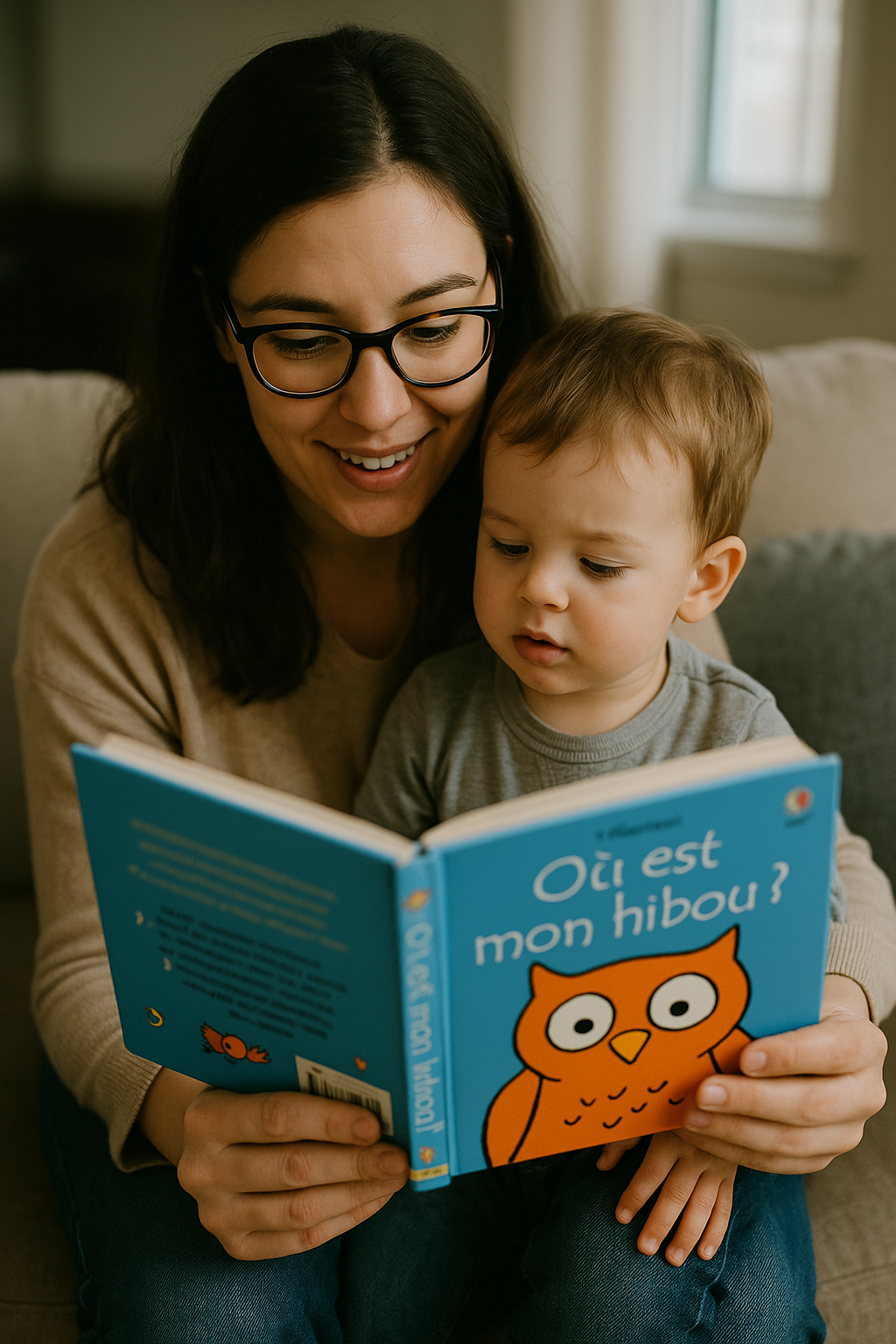
Like many toddlers, mine has a short attention span. I quickly realized that long storytimes weren’t going to work. So now I read to him while he’s winding down with his milk before bed. I’ve found some bilingual English-French books on Amazon that my husband reads in English while I read the same stories in French. This way, he’s exposed to the same narrative in both languages — and it’s still part of a relaxed, cozy routine.
3. Use Technology Strategically
French language media isn’t always easy to find in the U.S., but luckily there are a lot of great resources online. I rely on YouTube for French songs and cartoons. We do try to limit screen time, but when dinner needs to be made, we allow a little tech time — and make it count by putting on a French-language app or show.
Another big win for us has been video chatting with family in Quebec. Hearing fluent, natural French from loved ones — and being encouraged to interact — helps make the language feel real and relevant to him.
4. Set Realistic Expectations and Let Go of Guilt
I drove myself crazy trying to cram “lessons” into every interaction. But the moment I stopped pressuring both of us and let language happen through everyday moments, I noticed my son became more responsive — and even started repeating words without being prompted.
It’s also important not to get discouraged when your child starts using more English than French. I’ve had to remind myself (often) that his English development isn’t a failure — it’s a sign that he’s learning and growing. The important thing is that I keep using French with him, regardless of how he responds.
Right now, he’s mixing languages. He’ll say “red lumière” instead of “lumière rouge” when we stop at a traffic light. Or he’ll point to the sky and say “moon” instead of “lune.” And yes, I feel a tiny twinge of disappointment. But then I remind myself: he’s only two. He’s learning how to talk — period. The language part will come.
When he says something in English, I respond in French: “Yes, that’s the lune. Daddy says ‘moon,’ but Mommy says lune.” It’s gentle. It’s consistent. And most of all — it keeps language learning warm, loving, and connected.