
Helping Children with Special Needs Develop Social Skills in Quebec
In Quebec’s educational landscape, supporting children with special needs remains a key mission for families, educators, and caregivers. Whether at home, in daycare, or at school, many children living with autism spectrum disorder, intellectual disabilities, or language delays face significant challenges in developing social skills.
Why Are Social Skills More Difficult to Acquire?
From an early age, social interaction is at the heart of a child’s overall development. However, for those with verbal communication delays, expressing needs, emotions, or even initiating a conversation can be difficult. This often leads to frustration, sometimes aggression, and eventually social isolation if peers don’t understand or begin to avoid the child.
In addition, emotional maturity may also be impacted. Skills such as sharing, waiting for a turn, following rules, or showing empathy aren’t automatic for all children. In Quebec’s early childhood education settings, educators often observe these gaps, especially in inclusive environments where every child grows at their own pace.
Adopting a Compassionate, Adapted Approach
To promote inclusion and help these children integrate socially, the first step is to shift our perspective. Replace judgment with understanding, irritation with patience, and recognize that what may seem like antisocial behavior is often a sign of unmet needs—not willful misconduct.
In Quebec, many child care centers (CPEs), schools, and community organizations already use inspiring practices to promote social skill development among children with special needs.
Practical Tools to Foster Social Skills
Here are several effective strategies, commonly used in educational settings across Quebec:
1. Visual Supports
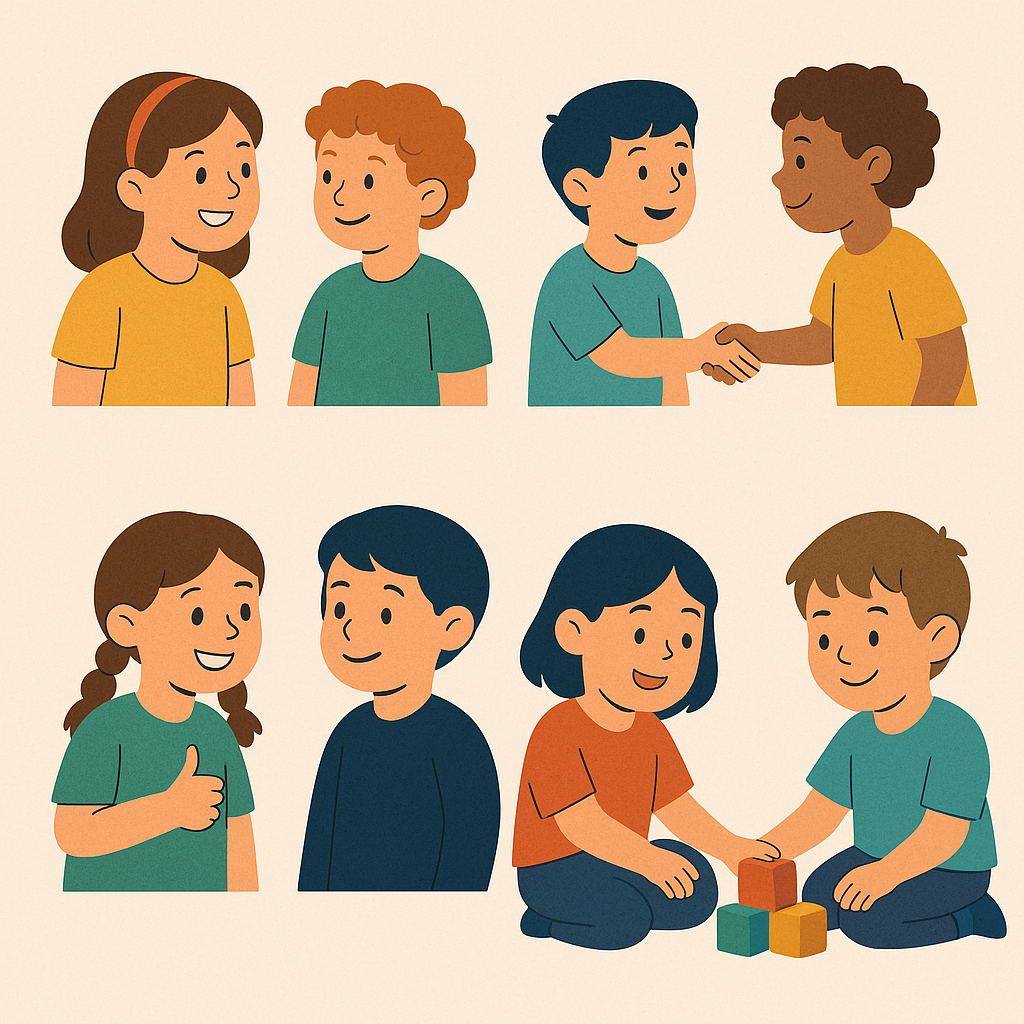
Social stories are especially powerful. By breaking down everyday scenarios into small steps—like asking to join in play—children can better understand expected behaviors. For example:
- Looking at a peer
- Smiling at the peer
- Approaching gently
- Asking, “Can I play with you?”
- Playing together respectfully and happily
2. Modeling and Imitation
Demonstrating the expected behavior before asking the child to do it is key. If you want them to say “please,” say it yourself during a roleplay, then invite the child to mimic you. Active reinforcement helps anchor positive behaviors.
3. Learning from Peers
Highlighting prosocial behaviors seen in other children is another great method. For instance, saying aloud, “Wow, Léa helped her friend clean up the blocks—that’s so kind!” helps the child understand what’s valued in social interactions.
4. Positive Reinforcement
Every small action matters. Praise a child for waiting their turn or using words instead of physical gestures. Positive feedback builds self-esteem and encourages them to repeat the behavior.
Adjusting Expectations, Celebrating Progress
In Quebec, inclusion also means setting realistic expectations. A child with special needs may not reach the same level of social maturity as their peers—and that’s okay. What matters most is progress. As a parent, educator, or caregiver, celebrate every step forward, no matter how small.
Ultimately, children learn best in environments built on trust, love, and respect. When we offer them that kind of support, we give them the opportunity to grow, thrive, and form lasting connections—within their families, daycares, schools, and in the heart of Quebec’s community.